

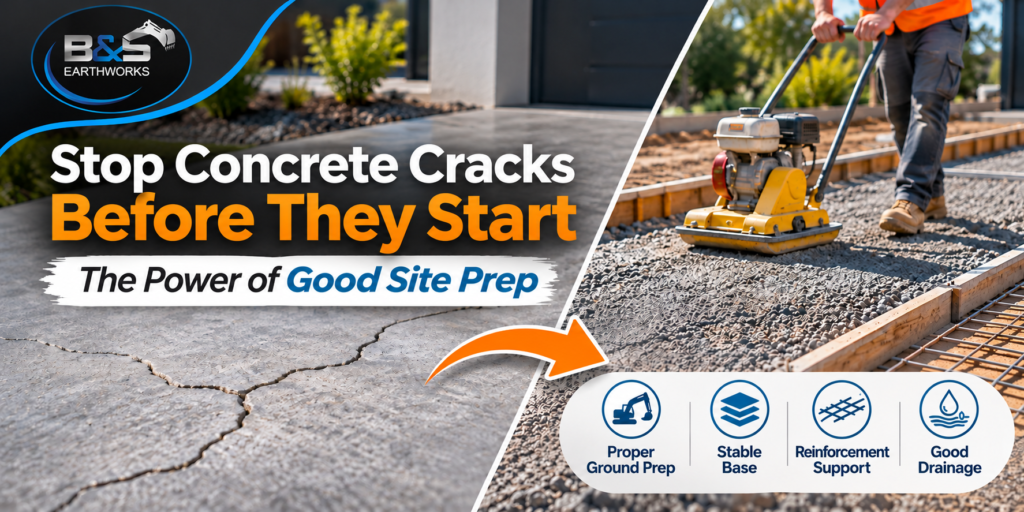

Concrete is strong, durable and widely used for driveways, footpaths, slabs and commercial projects. However, even newly poured concrete can develop cracks if the ground beneath it is not properly prepared.
While some cracking is a natural part of concrete curing, poor site preparation can lead to uneven settling, structural damage and costly repairs. Understanding what causes concrete to crack and how to prevent it is essential for achieving a long-lasting result.
Why Does Concrete Crack?
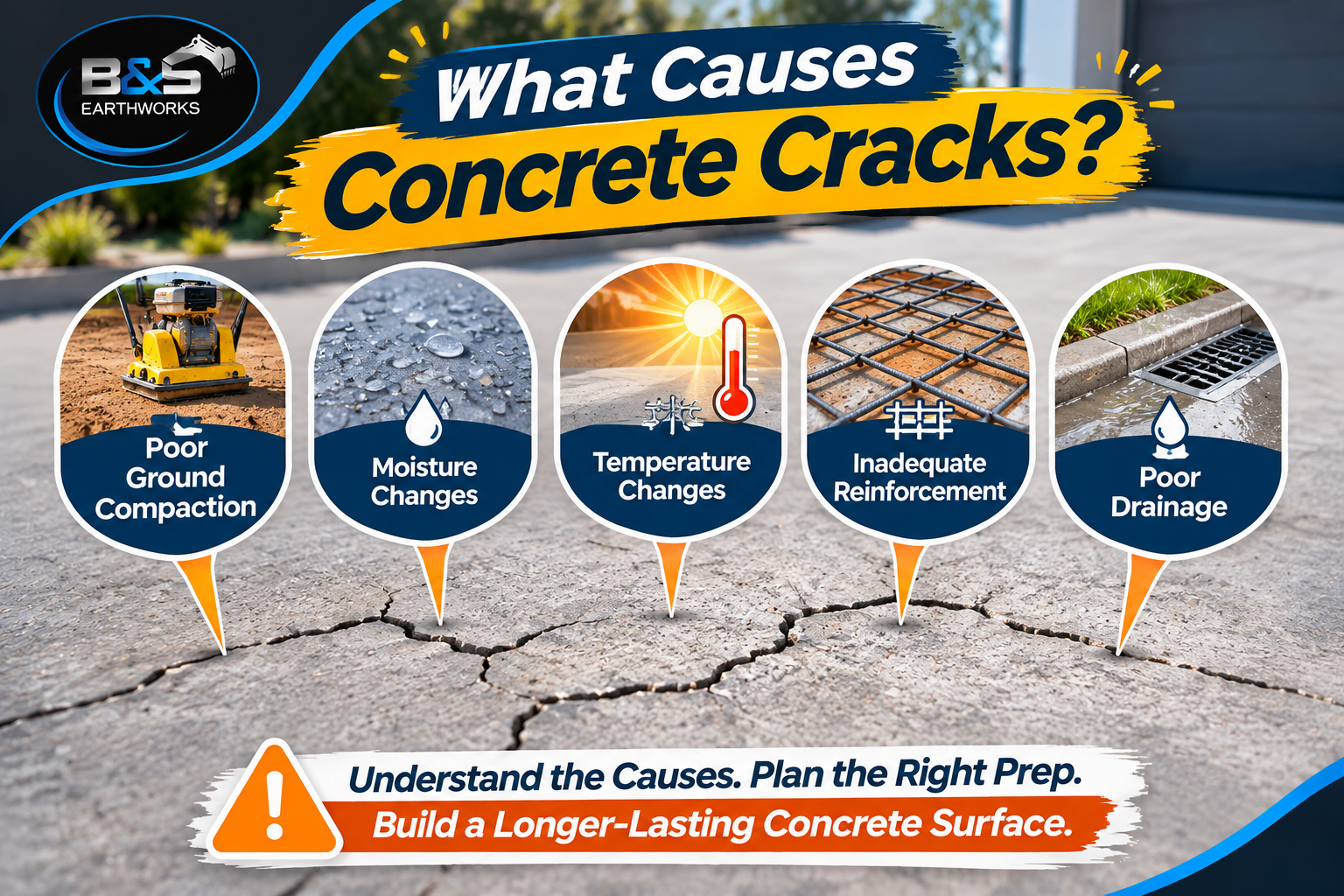
Concrete can crack for several reasons, including:
- Poor ground compaction: Loose or uneven soil can settle beneath the concrete, leaving unsupported areas that eventually crack.
- Moisture changes: Concrete naturally shrinks as it dries and cures. Rapid moisture loss can increase the risk of surface cracking.
- Temperature changes: Heat and temperature fluctuations cause concrete to expand and contract, creating stress within the slab.
- Inadequate reinforcement: Incorrectly positioned or insufficient reinforcement can make concrete more vulnerable to cracking.
- Poor drainage: Water collecting beneath or around a concrete surface can weaken the supporting ground and contribute to movement.
Fine shrinkage cracks may be relatively harmless, but widening cracks, uneven surfaces or cracks that continue to develop should be assessed by a qualified professional.
How Good Site Preparation Prevents Concrete Cracks
The quality of concrete depends on more than the mix itself. Proper groundwork creates a stable foundation and reduces the risk of future damage.
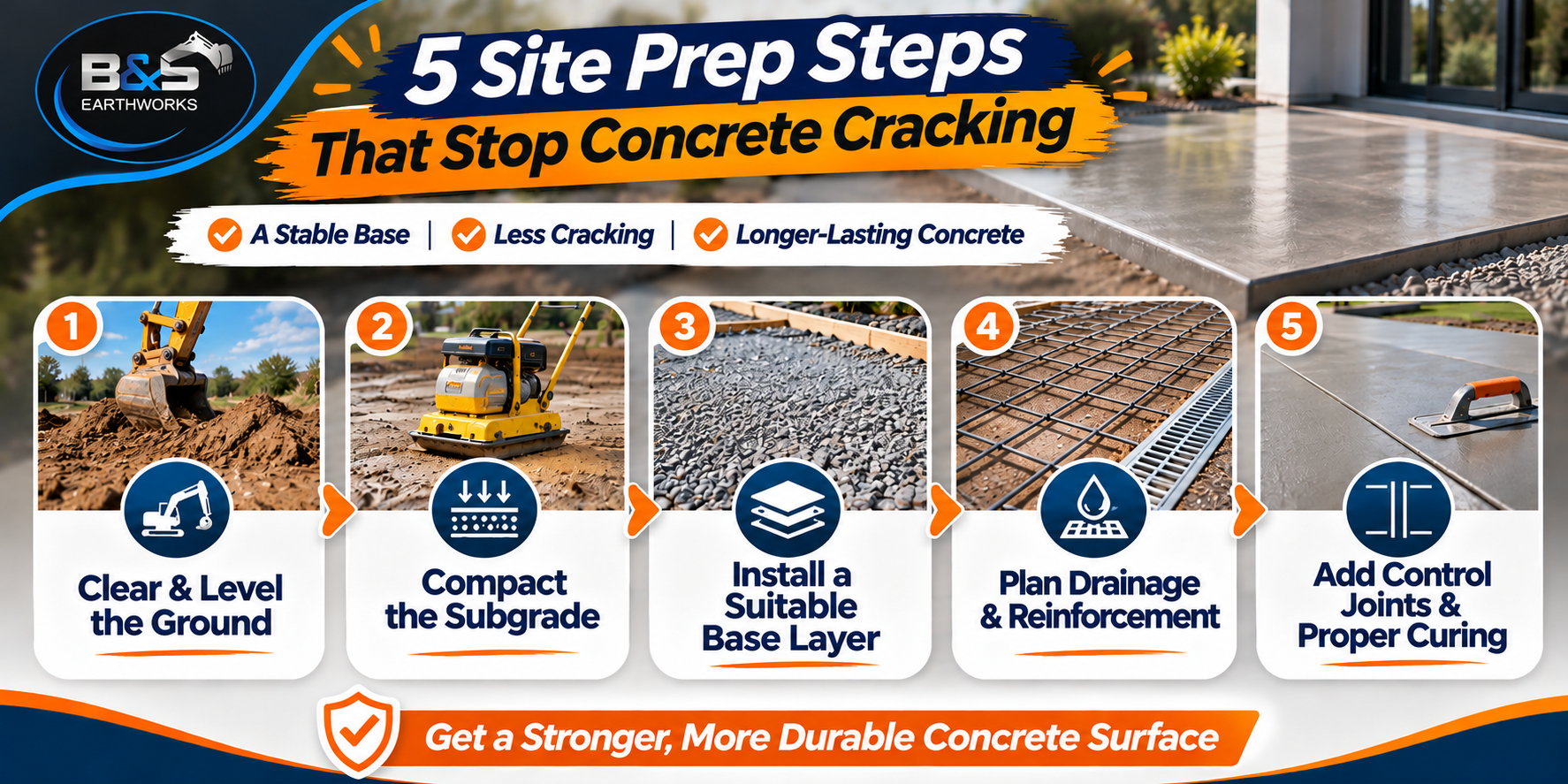
1. Clear and Level the Ground
Firstly, the ground is cleared of vegetation, loose soil, unsuitable materials and debris. After that the site should be excavated and levelled to the needed depth, and a consistent foundation for the concrete is created.
2. Compact the Subgrade Properly
If the ground is loose, it can shift under the weight of concrete, vehicles and other loads. Proper compaction helps create a firm, stable base that reduces settlement and uneven movement.
3. Install a Suitable Base Layer
Depending on the project and ground conditions, a compacted road base or other specified material may be required. A well-prepared base helps distribute loads evenly and provides consistent support beneath the slab.
4. Plan Drainage and Reinforcement
Water should be directed away from the concrete wherever practical. Appropriate reinforcement, including steel mesh where specified, also helps control crack widths and improve the slab’s performance.
5. Include Control Joints and Proper Curing
Control joints create planned locations for concrete to crack as it naturally shrinks. Correct placement, finishing and curing help minimise uncontrolled cracking and improve long-term durability.
Why Local Conditions Matter for Concrete Works in Mildura
Mildura’s hot, dry and sometimes windy conditions can cause fresh concrete to lose moisture quickly. This increases the importance of choosing suitable pouring conditions and following proper curing practices.
Ground conditions also need to be assessed before construction begins. Preparing the site according to its soil, drainage requirements and intended use helps create a more reliable concrete surface.
For concrete works Mildura, good site preparation is particularly important for driveways, footpaths, slabs and other surfaces exposed to regular use and changing weather conditions.
Choose B&S Earthworks for Quality Concrete Preparation
A durable concrete surface starts with quality groundwork. B&S Earthworks provides concrete and earthmoving services in the Mildura region, with experience across projects involving excavation, grading, subgrade compaction and concrete construction.
Whether you’re planning a driveway, footpath or larger concrete project, getting the preparation right can help reduce future problems and protect your investment.
Planning a concrete project? Contact B&S Earthworks today to discuss your requirements and request a quote.